The Morgan Plus 4 Plus is even cooler than you remember

by Richard Dredge in Hagerty.com

15 June 2023

You could be forgiven for thinking that Morgan didn’t produce a fixed-head car until relatively recently, with the introduction of the Aeromax in 2005. But that’s not the case, because back in the Sixties this storied British car maker tried to offer something new: a fixed-head car known as the Plus 4 Plus. The English company got its fingers badly burned in the process—so much that it waited for the better part of half a century before it tried the same thing again.
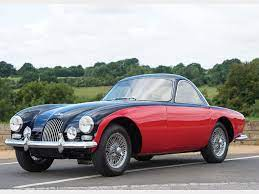
Founded in 1909 as a maker of three-wheelers, Morgan introduced its first four-wheeler 25 years later. By the time the Plus 4 Plus was unveiled at the 1963 Earls Court Motor Show, Morgan had been building cars for more than half a century. They were all built using the same technique: an ash frame over which steel panels were attached. All Morgans were open-topped with only rudimentary weather protection to that point, so when the fiberglass-bodied Plus 4 Plus was unveiled, Morgan purists were horrified.

Even within Morgan there was dissent over the Plus 4 Plus. In the 1950s Peter Morgan had started to consider the possibility of Morgan producing a fully enclosed car, having seen what Lotus had done with the fiberglass-bodied Elite, Jaguar with its XK140/150 coupé, and MG with the A coupé. But his father and company founder Henry (HFS Morgan) wasn’t convinced; he reckoned that the benefits and durability of fiberglass were not proven. Knowing that the Morgan Plus 4 chassis was somewhat flexible, he was sure that the plastic bodywork would soon crack.

Peter and Henry couldn’t agree on whether or not to embrace this brave new world of plastic-bodied cars, but in 1959 Henry died, leaving his son to run the company. Within a couple of years Peter decided to go for it, and towards the end of 1962 he explored the possibility of an enclosed fiberglass-bodied Morgan with industry experts EB Plastics. This Staffordshire-based company was behind various Ford Pop-based bodyshells as well as the EB Debonair sports saloon, and it also made the cabs for Foden and ERF Trucks plus Austin-Parkinson electric vehicles, so it had a pretty good idea of working with plastics.Reassured by the company’s experience, Peter Morgan commissioned EB Plastics to design and build a prototype fixed-head Morgan, to be based on the existing Plus 4 chassis. The oily bits had to be carried over wholesale, the Morgan family look had to be retained, and the front overhang had to be minimal.

John Edwards, EB Plastics founder, came up with some sketches for Peter Morgan, who reckoned that they hit the spot perfectly. The only chassis change needed would be a pair of sheet steel extensions that bolted either side of the engine, linking the front suspension to the bulkhead, resulting in a much sturdier structure that reduced the chances of the bodyshell cracking. Next step was to create a scale model, and with Peter Morgan happy that things were moving in the right direction, EB Plastics set about building a running prototype on a Morgan-supplied Plus 4 chassis; all production cars would be made in Morgan’s Malvern factory though, with the bodyshells shipped in.

By March 1963 the prototype was complete and Peter Morgan immediately embarked on a road trip with his wife, taking in France and Spain. The extra-stiff front end showed up the unforgiving nature of the Plus 4’s suspension, but other than that the car acquitted itself pretty admirably. John Bolster, technical editor of Autosport, was certainly impressed: “In a veritable cloudburst, I drove along Ross Spur in sheets of spray, reaching 105 mph. The famous controllability of the Morgan was fully in evidence, fast curves being taken at speed in complete confidence.” Such positivity was typical of the press coverage, with reviews citing the car’s excellent build quality.

Despite rave reviews, the Plus 4 Plus was unveiled to gasps of horror at the October 1963 motor show, priced at £1275. With the regular Plus 4 costing just £816, potential buyers reckoned that was a hefty premium to pay for something they considered ugly, even if it was £347 less than Lotus’s rather more sophisticated Elite. Peter Morgan later disclosed that he only ever intended to make and sell 50 examples of the Plus 4 Plus, and the pricing reflected that. Unfortunately for him, 50 copies was rather optimistic …

In a bid to prove the Plus 4 Plus’s worth, Peter Morgan set about racing and rallying the prototype. He and the car performed well and by 1966 it had notched up 50,000 miles, but the Plus 4 Plus’s awkward proportions and the fact that it broke with tradition, meant that it was never going to fly. Over the next four years just 26 examples were made before Morgan cut its losses and struck the Plus 4 Plus from its price list. It would be more than 40 years before the company offered another fixed-head model again. and even then it was only on a limited basis.
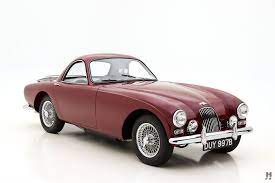
The History of Morgan Motor cars

The History of Morgan Cars

Thanks to Autocar UK

Morgan Motor Company was born in 1909 when its founder, Henry Frederick Stanley Morgan, decided to make his own cars in the town of Malvern, Worcestershire.

That year, he created the company’s first prototype of its iconic Three-Wheeler model – the Runabout, which was initially invented for his own personal use at the time. The one-seater Runabout was not originally intended as a commercial venture until the promising reaction to Morgan’s creation encouraged him to put the car into production.

A year later, the Runabout was unveiled at the 1910 Olympia Motor Show in London. Powered by a 7bhp Peugeot V-Twin engine mated to a tubular steel chassis, the light nature of the car meant it had a unique power-to-weight ratio of 90bhp per tonne; making it one of the fastest accelerating vehicles at that time.

In 1912, Morgan Motor Company officially formed as a private limited company, with HFS Morgan as managing director and his father George Morgan, who had invested considerably in his son’s business, as its first chairman. The car maker began flexing its competitive muscle when in 1913 it won the International Cyclecar Grand Prix at Amiens in France, beating strong opposition from many continental four-wheelers. That same year also saw a Morgan achieve the fastest time at the celebrated Shelsley Walsh Hill Climb at an average speed of 22mph. The three-wheeler model used became the basis for the Grand Prix, Aero and Sports models between 1913 and 1926.

Due to increased demand following these victories, in December 1913 HFS Morgan purchased a large plot of land on Pickersleigh Road – a quarter of a mile from the original Worcester Road factory – and proceeded to build two large workshops on the plot, to this day the site for the current plant and known traditionally as the ‘Works’.

New models were being added to the Morgan range and in 1921 a four-seater family ‘Runabout’ was available for the first time.

In 1933, the Morgan F-4 debuted at that year’s Olympia Motor Show. Rather than the tubular steel chassis, the four-seater F-4 used a Z-section steel ladder-frame chassis mated to a four-cylinder Ford Sidevalve engine used in the Model Y. The F-4 was supplemented by the two-seater F-2 in 1935 with production of the Ford-engine three-wheelers continuing until 1952.

Three years later and Morgan’s first four-wheel car, the 4-4 sports car, was revealed at the London and Paris exhibitions. The 4-4 – indicating four wheels and four cylinders – was an immediate success with four-seater and Drophead coupé versions arriving shortly thereafter. Still in production today, the Morgan 4-4 holds the record for the world’s longest production run of the same model. Alongside the 4-4, the three-wheeler remained in production until 1952 although sales of the V-twin engined cars were in decline.

Fast forward to 1950 and the Morgan Plus 4 was launched. Initially powered by a 2088cc Vanguard unit that developed 68bhp, later Plus 4s used Triumph TR2-TR4 engines from 1954 to 1969.

Plus 4 with TR 3 engine

A lull period for Plus 4 production occurred in 1969 and didn’t resume until 1985 when a 2.0-litre inline-four cylinder Fiat engine was used for three years, followed by a four-cylinder Rover engine. The Plus 4 returned again in 2004, this time with a potent 155bhp 2.0-litre Ford unit dropped into the body.

In 1955 the Morgan 4/4 became the Series II 4-4 and was of similar design to the Plus 4, but fitted with a smaller 36bhp Ford side valve engine and integral gearbox; the objective being to provide a sports car with lively performance for the enthusiast with modest means. 

In 1959 the bespoke British carmaker suffered a great loss when the company’s founder HFS Morgan died. Known as ‘Harry’ by family and friends, he was one of the great innovators of motoring and highly respected throughout the industry. Peter Morgan, son of HFS, took over the reins of the company until a few years before his death in 2003.

In 1966 the Triumph TR engine was coming to the end of its life and so Morgan struck a deal with Rover to use the aluminium Rover 3.5-litre V8 engine – spawning the Morgan Plus 8 in 1968. By 1983, the Rover EFI V8’s power was up to 204bhp, which allied to a kerb weight of 851kg, made for a 0-60mph time of 5.6sec for the Plus 8 – enough to give Porsche 911 owners of that time a sweaty brow. The Morgan Plus 8 proved to be one of the most successful cars for the company and production continued for 36 years right up to its discontinuation in 2004.

Morgan Plus 8

The same year production of the Plus 8 ceased, the traditionally styled roadster debuted, powered by a 3.0-litre 24-valve V6 derived from the Ford Mondeo. The resultant shoehorning of said lump helped the roadster accelerate from 0-62mph in 4.9sec and onto a top speed of 134mph. In 2011 the engine was replaced with a Ford 3.7-litre Duratec Cyclone V6 with a power hike to 280bhp. In 2000 Morgan took a punt launching the Aero 8 – the first new Morgan design since 1948 and the first Morgan vehicle with an aluminium chassis and frame as opposed to the traditional aluminium skinned wooden body tub on a steel chassis. Originally powered by a 4.4-litre BMW V8 mated to a six-speed Getrag transmission, in 2008 the Aero 8 received BMW’s 367bhp 4.8-litre V8 and an optional automatic transmission became available

Morgam Aero